

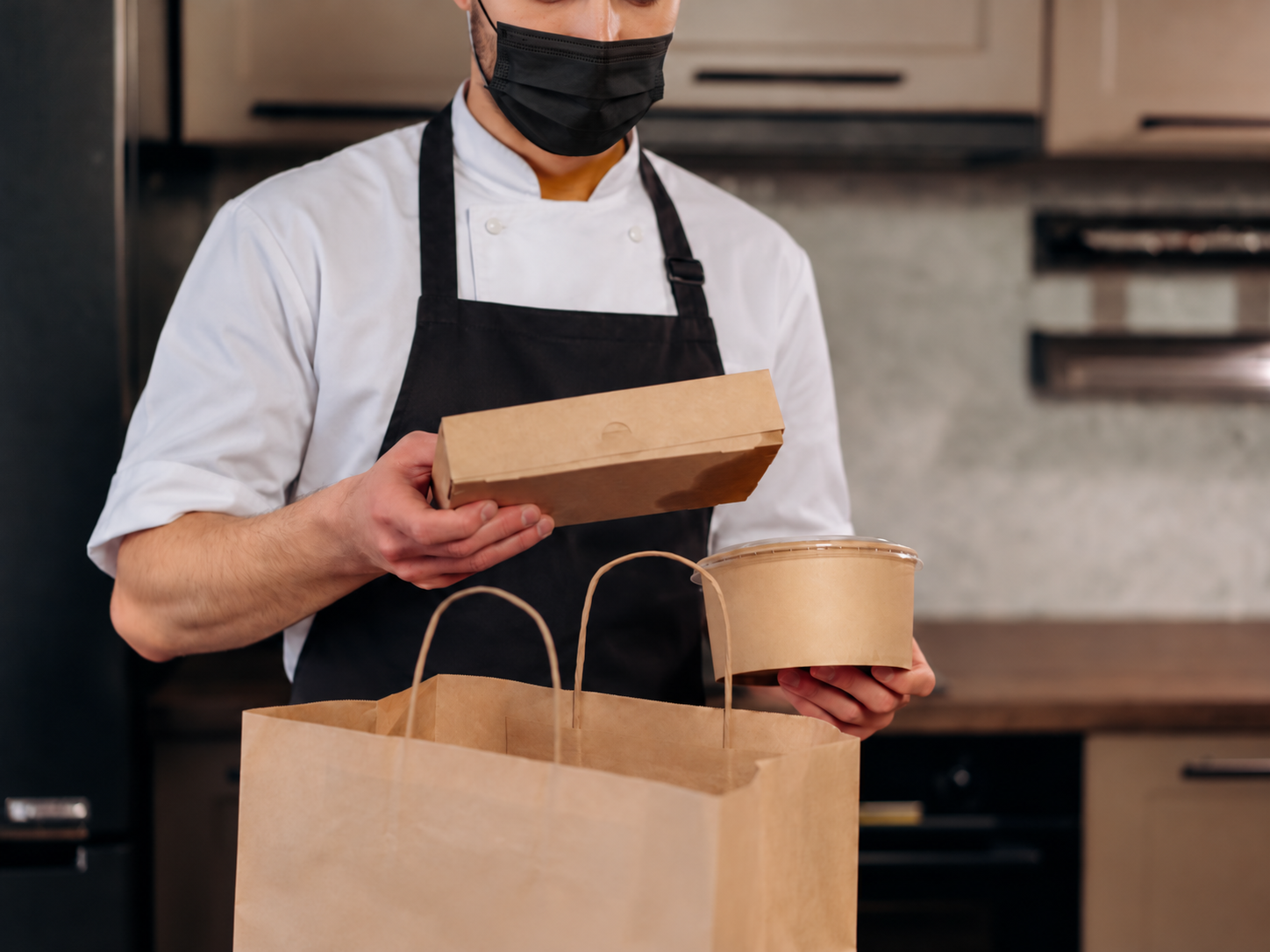
Takeaway and food delivery have become a regular part of how Malaysians order meals, but good packaging needs to do more than simply hold the food. It has to protect the meal, make it easy to carry and help it arrive in a condition the customer can still enjoy.
The best takeaway food packaging depends on what you are serving, how hot or moist the food is, how long it will travel and how the customer is expected to eat it. A container that works perfectly for a quick takeaway order may not be the best choice for a 30-minute delivery.
For F&B businesses, the goal is not to find one packaging format for everything. It is to build a practical packaging setup that matches the menu and the way orders move from your kitchen to the customer.
What Makes Good Takeaway Food Packaging?
Good food packaging should fit the product rather than forcing every menu item into the same container.
Portion size is one of the first things to consider. Packaging that is too large can make the meal look undersized and use more material than necessary, while packaging that is too small may make closing, stacking or presentation more difficult.
The type of food also matters. Dry snacks, rice meals, soups and cold desserts have very different requirements when it comes to moisture, depth and closure.
For delivery orders, the packaging should also remain practical after leaving the counter. Lid fit, structural strength and stackability can become much more important once the order is placed inside a delivery bag and transported over a longer distance.
Takeaway vs Food Delivery: Why the Packaging Requirements Change
Takeaway and delivery are often grouped together, but the packaging journey can be quite different.
A takeaway customer may collect the food and eat it shortly afterwards. A delivery order could pass through several stages of handling before reaching the customer.
| Factor | Takeaway | Food Delivery |
|---|---|---|
| Travel Time | Usually shorter | Often longer |
| Handling | Mostly carried by the customer | Handled by staff, rider and customer |
| Closure | Important | More critical |
| Leak Resistance | Important | Higher priority |
| Stackability | Useful | Very important for multiple orders |
| Presentation | Should remain neat | Needs to stay presentable after transit |
This is why food delivery packaging should be considered as a complete system rather than just a container. The container, lid, portion size and how items are arranged together can all affect the final order.
Choosing Packaging Based on the Food You Serve
Different foods place different demands on packaging. Instead of asking which container is “best” overall, it is more useful to ask which format works best for the food and service situation.
Rice Meals and Mixed Dishes
Rice meals, noodles with sides and other complete meals usually benefit from packaging that offers enough space for the portion while remaining easy to close and carry.
Kraft paper lunch boxes, paper bowls and plastic food containers can all work depending on the dish and presentation style.
For businesses serving many different meal combinations, it may be useful to keep a few sizes rather than trying to use one oversized container across the entire menu
Fried Food and Snacks
Fried chicken, fries, finger food and similar items need enough structure for carrying while still being convenient for customers to eat from.
Paper trays can work well for quick-service situations, while lunch boxes or other enclosed formats may be more suitable where the food needs to travel further.
Packaging should also fit the portion properly so that items are not excessively compressed during handling.
Bakery Items and Light Food
Pastries, cakes, sandwiches and lighter foods often benefit from packaging that protects the product without making it difficult to serve.
Paper trays or suitable containers can offer a simple format for counter service, takeaway and short-distance delivery.
Presentation can also matter more for these items, particularly when customers can see the food before purchase.
Cold Drinks
Clear plastic cups are a practical choice for many cold beverages because customers can see the drink itself.
For takeaway and delivery, the cup should also be paired with a compatible lid that fits securely and suits the type of beverage being served.
Businesses should consider the drink size, whether toppings are included and how cups will be carried together when choosing the format.
Hot Drinks
Coffee, tea and other hot beverages require packaging designed around heat and comfortable handling.
Single-wall and double-wall paper cups are commonly used for different beverage applications, with the choice depending on the drink, serving temperature and desired insulation.
A compatible cup lid is also important for takeaway service, particularly where the customer will be walking or driving with the drink.
Paper, Plastic or a Combination?
F&B businesses do not necessarily need to choose between paper and plastic for the entire operation.
A café might use paper cups for hot drinks, plastic cups for cold beverages, kraft lunch boxes for selected meals and plastic food containers where secure closure or product visibility is more useful.
The better question is: Which material and packaging format makes the most sense for this particular menu item?
Using a combination of formats can often create a more practical system than trying to standardise everything around one material.
For a more detailed comparison of the two materials, see our guide to Paper vs Plastic Food Packaging.
Packaging for Short Takeaway Trips vs Longer Deliveries

Travel time is another factor that is easy to overlook.
For a quick takeaway order, the packaging may only need to remain secure for a short walk or drive. In this situation, convenience and fast packing can be the priority.
Longer delivery journeys introduce more movement, stacking and time inside an enclosed delivery bag.
For these orders, businesses should pay closer attention to:
- lid security
- container strength
- leak resistance
- moisture buildup
- stackability
- portion stability
The longer the journey, the more important it becomes to think about what happens after the food leaves the kitchen.
Common Food Packaging Mistakes to Avoid
One common mistake is choosing packaging based only on unit price. A cheaper container may not be good value if it causes leaking, poor presentation or frequent packing problems.
Another issue is using one container size for too many menu items. Oversized packaging can waste space and materials, while containers that are too small can make portions look crowded or difficult to close.
Businesses should also avoid assuming that every food-grade plastic container is suitable for hot food or microwave use. Packaging should always be used according to its intended application and specifications.
Finally, lids should be treated as part of the packaging decision rather than an afterthought. A good container paired with a poorly fitting lid can quickly become a delivery problem.
Building a Practical Packaging Range for Your Menu
Most F&B businesses do not need a huge number of packaging formats. A smaller, well-planned range is often easier to store, order and manage.
A practical starting point could look like this:
| Menu Need | Packaging Direction |
|---|---|
| Main Takeaway Meals | Lunch box, paper bowl or food container |
| Soup or Saucy Meals | Deep container with compatible lid |
| Fried Food and Snacks | Paper tray or suitable enclosed box |
| Cold Drinks | Plastic cup with compatible lid |
| Hot Drinks | Paper cup with suitable lid |
| Side Dishes | Smaller bowl, tray or food container |
The exact combination will depend on the menu, but the goal is to cover the main order types without stocking several products that perform almost the same job.
This can also make purchasing easier because staff have a clearer idea of which packaging format belongs with each menu item.
Choosing Food Packaging for Your F&B Business
There is no single “best” packaging for every takeaway or delivery order.
The right choice should fit the food, portion size, temperature, handling requirements and expected journey to the customer. A simple takeaway snack may only need a lightweight tray, while a saucy meal travelling across town may require a deeper container with a more secure closure.
LCCS Food Packaging supplies a range of paper and plastic packaging for Malaysian F&B businesses, including paper cups, bowls, trays, kraft lunch boxes, plastic cups, plastic food containers, lids and cutlery.
For businesses reviewing their food packaging in Malaysia, the most practical approach is to build a small range of formats that work together across the menu. When the packaging matches the food and the delivery journey, it becomes easier for staff to pack orders consistently and for customers to receive them in better condition.