

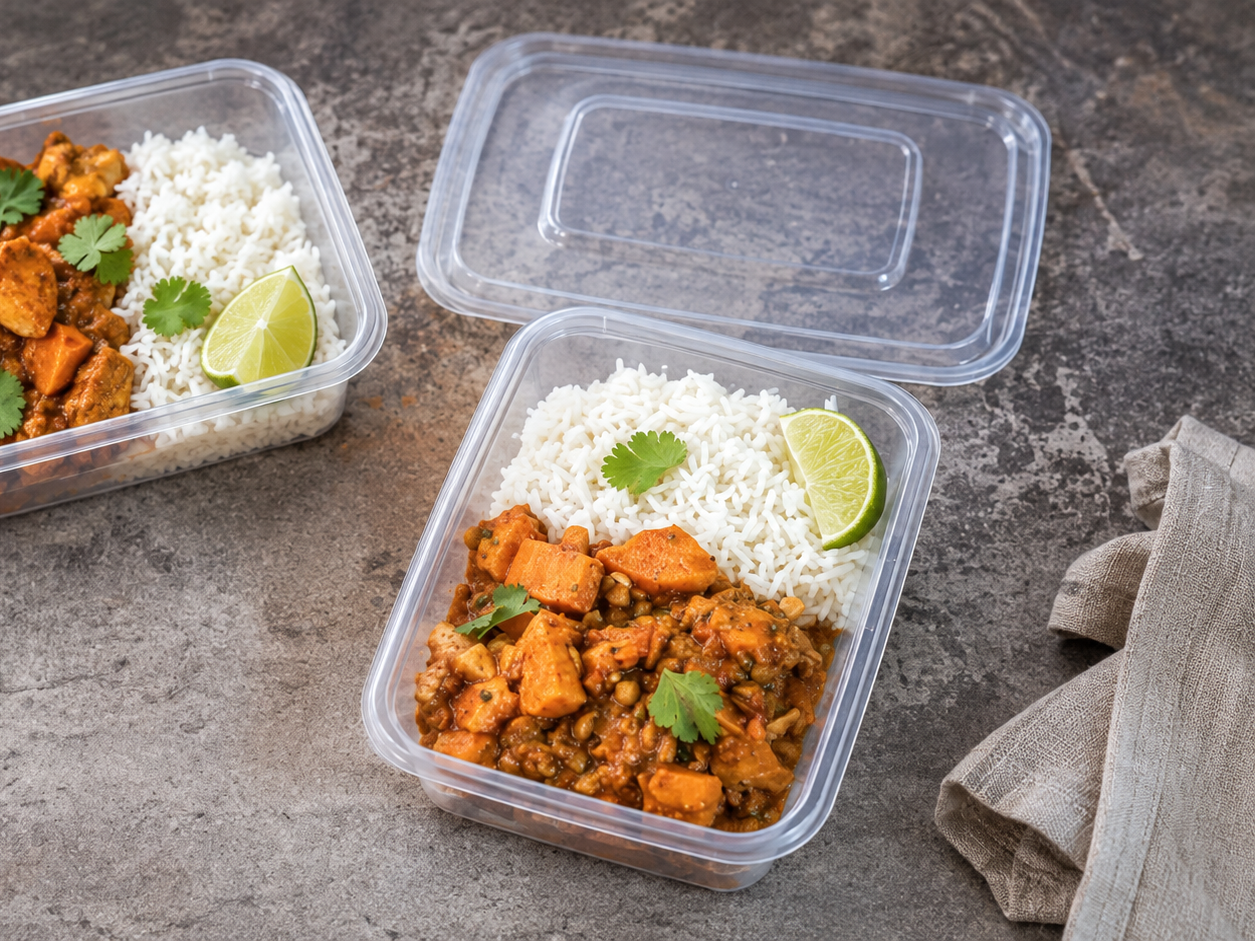
Plastic food packaging is used every day across restaurants, cafés, takeaway businesses and food delivery operations. But just because a container is made from plastic does not automatically mean it is suitable for every type of food or every serving condition.
Hot meals, cold desserts, oily dishes and takeaway drinks can all place different demands on packaging. That is why understanding what food-grade plastic means is useful for any F&B business buying plastic containers, cups or lids.
At its simplest, food-grade plastic refers to plastic materials intended for contact with food under appropriate conditions of use. The important part is how the packaging is intended to be used, including the type of food, temperature and duration of contact. Food-contact regulators also assess materials according to these kinds of conditions rather than treating every plastic application as identical.
What Does Food-Grade Plastic Actually Mean?
When plastic packaging is intended for food contact, its materials should be suitable for that intended application and should not introduce harmful substances into the food under normal conditions of use.
Malaysia’s Food Regulations 1985 specifically prohibit packaging, containers and utensils that release or may release poisonous, harmful or deteriorating substances into food.
For an F&B business, however, the easiest way to understand food-grade plastic is that the packaging should be designed for contact with the type of food and conditions in which it will actually be used.
This is why a container intended for chilled desserts should not automatically be assumed suitable for freshly cooked hot food.
Likewise, the words food-grade do not automatically mean the product is microwave-safe, oven-safe, freezer-safe or suitable for unlimited reuse.
Why Different Plastics Are Used for Food Packaging
“Plastic” describes a broad family of materials rather than one single material.
Different plastics can vary in:
- clarity
- flexibility
- rigidity
- moisture resistance
- heat tolerance
- weight
- impact resistance
- intended food-contact applications
This is why manufacturers use different materials for beverage cups, takeaway containers, bottles, lids and other forms of plastic food packaging.
The food itself also matters. Regulatory assessments for food-contact materials distinguish between applications involving factors such as aqueous foods, acidic foods, oily or fatty foods, dry foods and beverages, as well as different temperature and storage conditions.
Common Plastics Used in Food Packaging
Several plastic materials are commonly encountered in food and beverage packaging. Their exact suitability still depends on how the finished product has been designed and specified.
| Plastic Type | General Characteristics | Common Packaging Applications |
|---|---|---|
| PET | Lightweight and often highly transparent | Beverage bottles, clear cups and selected cold-food containers |
| PP | Durable and widely used across food-contact applications | Takeaway containers, cups, lids and selected hot-food applications |
| HDPE | Strong with good moisture resistance | Bottles, containers and selected food packaging applications |
The material name alone should not be used as the final test of suitability.
A food business should still check the actual product specification and intended application supplied by the manufacturer or packaging supplier.
Does Food-Grade Plastic Mean It Is Safe for Hot Food?
Not automatically.
This is one of the most important distinctions for F&B businesses.
A plastic container may be suitable for food contact without being designed for freshly cooked food at a high temperature. Similarly, packaging intended for refrigerated storage may not necessarily be intended for reheating.
Food-contact applications are assessed according to different conditions of use, including hot filling, room-temperature storage, refrigeration, freezing and reheating.
Before using plastic packaging for hot meals, businesses should check whether the product is specifically intended for the expected temperature and application.
For example, consider:
How hot is the food when packed?
Freshly cooked food may expose a container to significantly more heat than a chilled product.
How long will the food remain inside?
A short takeaway journey is different from extended storage.
Will the customer reheat it?
If reheating is expected, check whether the packaging is specifically approved or specified for that use.
The safest approach is to follow the product’s intended conditions rather than assuming all food-grade plastics behave the same way.
Food-Grade, Microwave-Safe and Freezer-Safe Are Not the Same Thing
These terms are often treated as interchangeable, but they describe different characteristics.
| Term | What It Generally Means |
|---|---|
| Food-Grade / Food-Contact Suitable | Intended for contact with food under specified conditions of use |
| Microwave-Safe | Designed for specified microwave use |
| Freezer-Safe | Designed to tolerate low-temperature storage |
| Reusable | Intended for repeated use under specified conditions |
A food-grade container therefore should not automatically be placed in a microwave simply because it is suitable for holding food.
The intended temperature, duration and use conditions still matter.
What Should F&B Businesses Check Before Buying Plastic Food Packaging?
For a restaurant or food business, packaging selection does not need to become a chemistry lesson. A few practical checks can usually narrow down the right product.
Start With the Food
Consider whether the food is hot, chilled, dry, oily, acidic, saucy or liquid.
A clear container used for pastries or salad may have very different requirements from packaging used for hot curry or soup.
Check the Intended Temperature
Ask whether the container is intended for cold food, room-temperature food, hot filling or another specific application.
If customers are likely to microwave or freeze the food, check whether the product is designed for that purpose rather than making assumptions.
Think About Takeaway and Delivery
A suitable material is only one part of good packaging.
For food delivery, businesses should also consider:
- lid fit
- leak resistance
- stackability
- container strength
- portion size
- how long the food will travel
A food-safe container that constantly leaks during delivery is still the wrong packaging choice for that menu item.
Check Product Information
Where temperature or food-contact suitability matters, look for specifications from the supplier or manufacturer.
Buying packaging based only on appearance, thickness or recycling symbols does not tell you everything about how the finished product is intended to be used.
Where Plastic Food Packaging Works Well
Plastic food packaging can be practical for F&B businesses where visibility, moisture resistance and secure containment are important. Clear containers, for example, can help present salads, desserts and prepared food while allowing customers to see the contents without opening the packaging.
Plastic containers can also work well for takeaway meals that require secure lids and easier handling during delivery, while clear plastic cups are commonly used for cold beverages where product visibility is part of the presentation.
The right format still depends on the food, temperature and intended use. Businesses comparing different packaging materials can also refer to our Paper vs Plastic Food Packaging guide for a broader look at both options.
Frequently Asked Questions About Food-Grade Plastic
A few common questions come up when businesses choose plastic food packaging, especially around heat, microwave use and food-contact suitability. Here are some of the most important points to understand before selecting containers for takeaway, delivery or everyday food service.
Is food-grade plastic always microwave-safe?
No. Food-contact suitability and microwave suitability are separate. Always check the product specifications and intended conditions of use.
No. Plastic products are made for different purposes, so food should only be packed in containers intended for food contact.
Not necessarily. Food-contact suitability and microwave use are separate considerations. Check the manufacturer’s stated conditions of use.
Can food-grade plastic be used for hot food?
Only if the packaging is specifically designed for the expected temperature and use. Food-grade does not automatically mean suitable for hot filling or reheating.
What plastic is commonly used for food packaging?
Materials such as PET, PP and HDPE are commonly used in food packaging, depending on the product and application.
How can businesses tell whether plastic packaging is suitable for food?
Check the supplier or manufacturer specifications, intended food application and temperature guidance before use.
For F&B businesses, the key is to choose plastic packaging around the food, serving temperature and takeaway requirements rather than relying on the term “food-grade” alone.
Choosing Plastic Food Packaging With Confidence
Understanding food-grade plastic is ultimately about choosing packaging that suits the food, temperature and intended use. Terms such as food-grade, microwave-safe and freezer-safe describe different requirements, so businesses should rely on the product specifications rather than assuming one label covers every situation.
For restaurants, cafés and takeaway businesses, the right plastic food packaging should also work practically during storage, packing, handling and delivery. Container size, lid compatibility and the way the food will be served all matter.
LCCS Food Packaging supplies plastic food containers, cups and related packaging for different F&B applications in Malaysia. Businesses reviewing their packaging setup can compare available formats and choose options that better match their menu, service style and day-to-day requirements.