

Food delivery has become a normal part of everyday dining in Malaysia, but every order also comes with packaging. For restaurants, cafés, cloud kitchens and other F&B businesses, that creates a balancing act: packaging needs to protect the food during delivery while also keeping unnecessary waste under control.
Choosing more eco-friendly packaging does not simply mean replacing every plastic container with paper. The right option still needs to suit the food, temperature, moisture level, delivery distance and customer experience.
For businesses looking to make more practical packaging choices, here are some of the eco-friendly food packaging options worth considering for delivery and takeaway.
What Does Eco-Friendly Food Packaging Actually Mean?
The term “eco-friendly packaging” can cover several different ideas.
Some packaging is designed to use more renewable materials. Some may be recyclable under suitable conditions, while others are biodegradable or compostable depending on their construction and how they are disposed of.
These terms are not interchangeable.
For F&B businesses, it is therefore better to look beyond the label and consider questions such as:
- What material is the packaging made from?
- Does it contain plastic or other coatings?
- Can it be recycled in practice?
- Is it designed to biodegrade or compost under specific conditions?
- How much packaging is actually needed for each order?
A practical sustainability strategy is often about reducing unnecessary material while choosing packaging that still performs properly for the food being delivered.
What Should Food Delivery Businesses Consider Before Switching Packaging?
Before changing packaging, consider how the food behaves during the delivery journey.
A dry pastry and a bowl of curry clearly need different packaging. Even two paper-based containers may perform very differently depending on the food inside.
Important factors include:
Temperature
Hot meals need packaging that can maintain its structure when exposed to heat.
Moisture and sauces
Soups, curries and heavily sauced meals require stronger containment than dry foods.
Grease
Fried food and oily dishes need packaging that can handle grease without becoming weak too quickly.
Delivery distance
A meal travelling five minutes has different packaging requirements from one travelling across town.
Closure and lid fit
A sustainable container is not very useful if the lid comes loose during delivery.
Portion size
Using oversized packaging wastes material and may allow food to move around during transport.
These operational considerations should come before choosing packaging based purely on appearance.
Eco-Friendly Packaging Options for Food Delivery
Kraft Paper Lunch Boxes
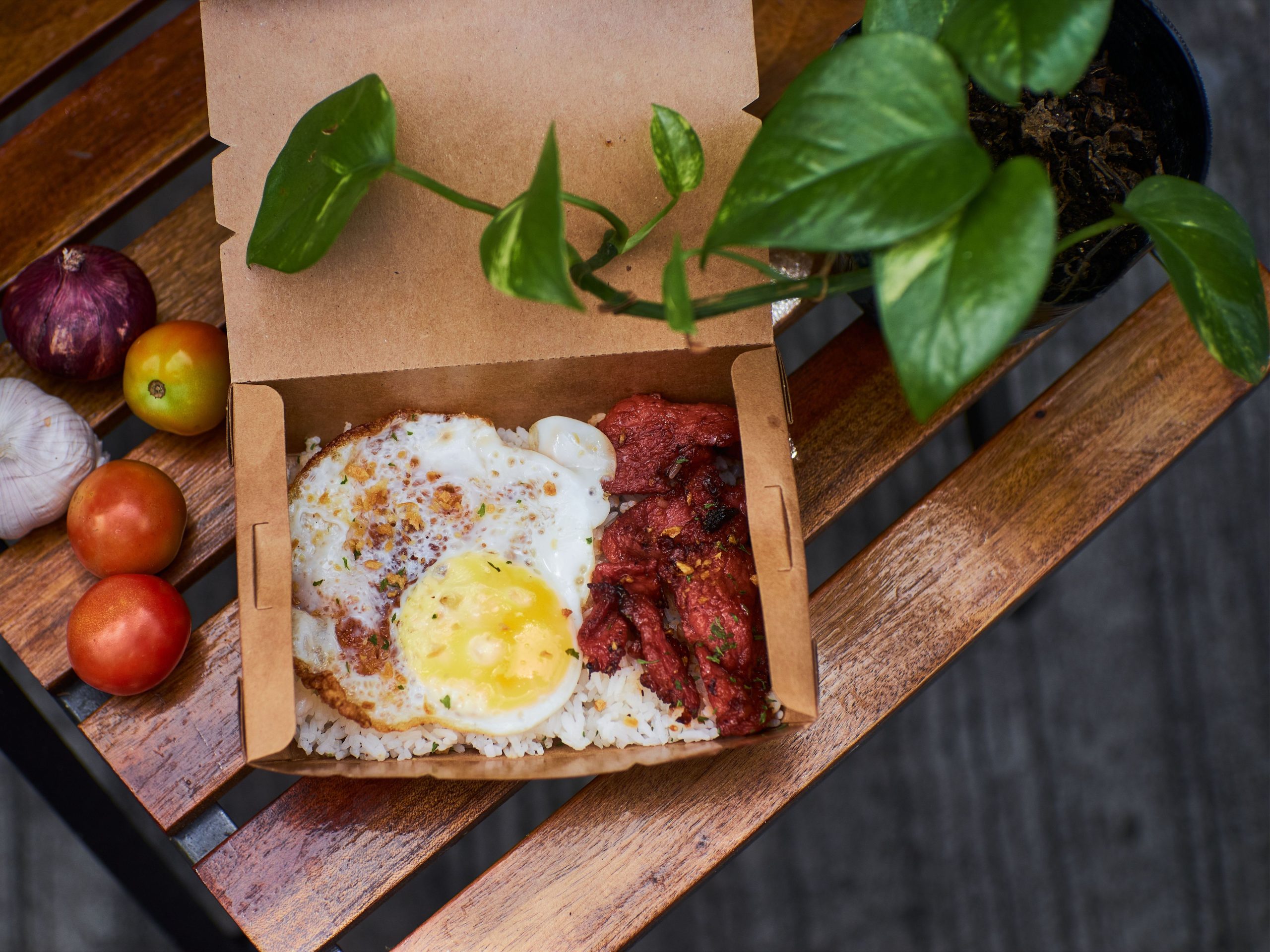
Kraft paper lunch boxes are a practical option for many takeaway meals, particularly rice dishes, noodles, pasta, snacks and ready-to-eat meals.
Their natural kraft appearance also suits businesses that want packaging with a simpler, more understated look.
For delivery businesses, lunch boxes can help keep the meal contained within a single package instead of relying on several unnecessary layers of wrapping.
They work especially well when the food is relatively structured and does not require the deep capacity of a bowl.
Paper Bowls for Rice, Noodles and Meal Sets
Paper bowls are useful when the food needs more depth than a standard lunch box.
They can suit:
- rice bowls
- noodles
- pasta
- side dishes
- salad-style meals
- selected hot or cold foods
The important factor is choosing the correct bowl and lid combination for the food being served.
For delivery orders, a properly sized bowl can also help reduce unnecessary empty space while keeping the meal easier to carry and present.
Paper Food Trays for Snacks and Lighter Meals
Not every delivery item needs a fully enclosed container.
Paper trays can be useful for products such as:
- fried snacks
- bakery items
- pastries
- side dishes
- finger foods
- small meal portions
For short takeaway journeys or food that will be packed inside a larger paper bag or box, trays can provide a simple way to hold and present the food without using a bulky container.
They are particularly useful for F&B businesses serving several smaller menu items.
Paper Cups for Takeaway Drinks
Drinks are easy to overlook when discussing sustainable food delivery packaging.
For cafés, restaurants and beverage businesses, paper cups can provide a practical alternative for hot beverages such as coffee and tea.
The cup itself is only one part of the packaging decision. Businesses should also consider:
- appropriate cup size
- whether single wall or double wall is needed
- lid compatibility
- whether a sleeve is required
- how the drink will be carried with the food order
Using the right cup size can also help avoid unnecessary material use.
Matching Lids and Containers Properly
One of the easiest ways to improve delivery packaging is simply to make sure the lid fits the container correctly.
A poor-fitting lid can lead to spills, additional plastic wrapping, double-bagging or even replacement meals.
Whether the business uses paper bowls, cups or other containers, the bowl lid and cup lid should be treated as part of the complete packaging system rather than an afterthought.
Good packaging should protect the food without forcing the business to compensate with extra layers.
Compostable and Biodegradable Packaging
Some businesses may also explore packaging specifically marketed as biodegradable or compostable.
These materials can offer another sustainability pathway, but businesses should understand exactly what the claim means before switching.
For example, certain compostable materials may require specific composting conditions rather than simply breaking down quickly in normal waste.
Before ordering in large quantities, ask the supplier about:
- the material used
- intended disposal method
- certification where applicable
- heat and moisture suitability
- shelf life
- storage requirements
This helps prevent businesses from choosing packaging based purely on a green-looking label.
Which Eco-Friendly Packaging Works Best for Different Foods?
There is no single packaging format that works for every menu.
| Food or Order Type | Suitable Packaging Direction | Main Consideration |
|---|---|---|
| Rice meals | Kraft lunch box or paper bowl | Portion size and secure closure |
| Noodles and pasta | Paper bowl or lunch box | Moisture handling and sufficient depth |
| Soup or saucy dishes | Bowl with secure lid | Leak resistance and lid fit |
| Fried snacks | Paper tray or suitable box | Grease handling and ventilation |
| Bakery items | Paper tray or box | Protection and presentation |
| Coffee and tea | Paper cup with compatible lid | Heat handling and carrying comfort |
| Side dishes | Smaller bowl or tray | Correct sizing and minimal excess packaging |
| Multi-item delivery orders | Combination of suitable containers | Avoid unnecessary overpacking |
The most sustainable-looking option is not automatically the best option.
If a container fails during delivery and the food has to be remade, additional food, packaging and transport may be wasted as well.
Performance still matters.
Eco-Friendly Packaging Is More Than Choosing Paper
Switching materials can help, but businesses should also look at how much packaging they use for every order.
A few practical improvements can make a meaningful difference.
Choose the Right Container Size
Using a container that is much larger than the meal wastes material and may also make the food look less appealing when it arrives. Standardising a few well-chosen sizes across the menu can simplify both purchasing and packaging.
Avoid Unnecessary Double Packaging
If the primary container and lid already protect the food properly, additional wrapping may not always be necessary. Businesses should review where extra layers genuinely add value.
Match Packaging to the Menu
A business does not need one packaging format for everything. A restaurant may use paper lunch boxes for dry meals, bowls for saucier dishes and trays for snacks. Choosing by food type usually produces a better result than forcing every menu item into the same container.
Review Cutlery and Accessories
Consider whether every delivery order automatically needs disposable cutlery, napkins or additional accessories. Allowing customers to request them only when required can reduce unnecessary items.
Think About Storage and Ordering Too
Packaging waste can also happen before the container reaches a customer. Ordering manageable quantities, storing packaging correctly and choosing products that can be used across several menu items can help reduce damaged or unused stock.
Finding the Right Packaging Balance for Food Delivery
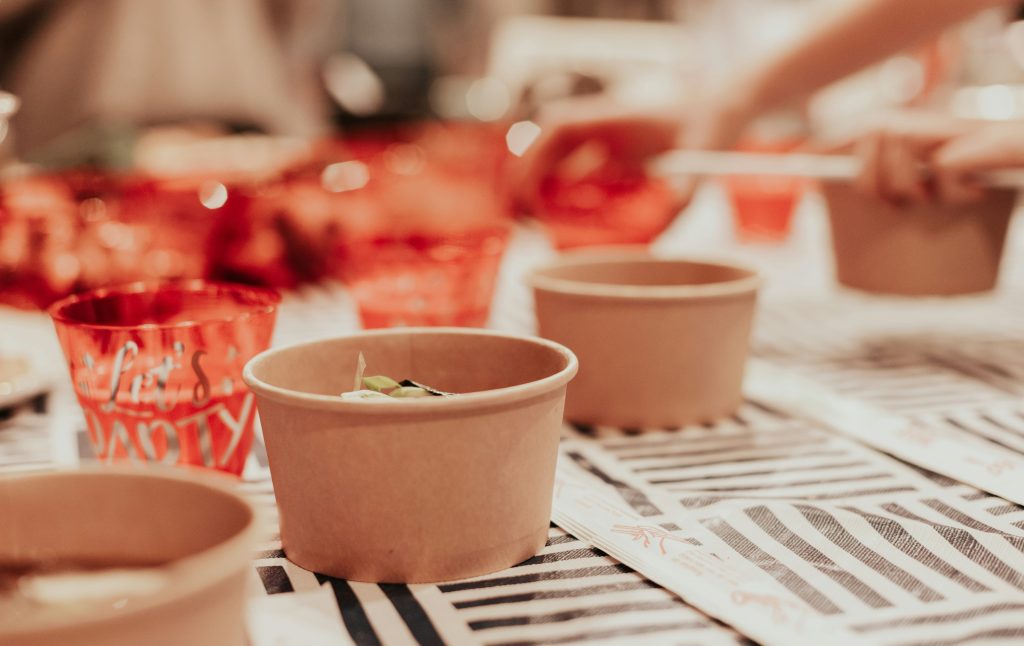
For most F&B businesses, the goal should not be to find one supposedly perfect eco-friendly package. The better approach is to choose packaging that balances material choice, food protection, delivery performance, customer experience, cost.
LCCS Food Packaging offers a range of paper-based packaging options for Malaysian F&B businesses, including paper bowls, trays, lunch boxes, cups and compatible lids.
This allows restaurants, cafés, cloud kitchens and delivery-focused businesses to build a packaging setup around the actual food being served instead of relying on a single container for every order.
Businesses can also combine different packaging formats across the menu. A rice meal may work well in a kraft lunch box, while noodles or saucier dishes may be better suited to a deeper bowl with a lid.
Making Food Delivery Packaging More Sustainable
Eco-friendly food packaging is not only about replacing one material with another. It is about making better packaging decisions across the entire delivery process.
Start by asking:
- Does the container suit the food?
- Is it the right size?
- Does it protect the meal throughout delivery?
- Are extra layers really necessary?
- Can packaging materials be reduced without affecting the customer experience?
For Malaysian F&B businesses, small improvements across hundreds or thousands of orders can make a much bigger difference than simply choosing packaging because it carries an “eco-friendly” label.
The best food delivery packaging is ultimately packaging that protects the food, uses materials thoughtfully and fits the way the business actually operates.
For restaurants, cafés, caterers and other F&B businesses looking for suitable paper packaging options, LCCS Food Packaging can help you compare different containers, sizes and lid combinations for your takeaway and delivery requirements.